
If you are considering open car transport, one of the first questions you may have is how many vehicles can actually fit on one carrier. The short answer is usually 7 to 10 vehicles, although the exact number depends on the trailer design, vehicle sizes, weight, and how the carrier is configured.Open carriers are designed to move several vehicles at the same time.
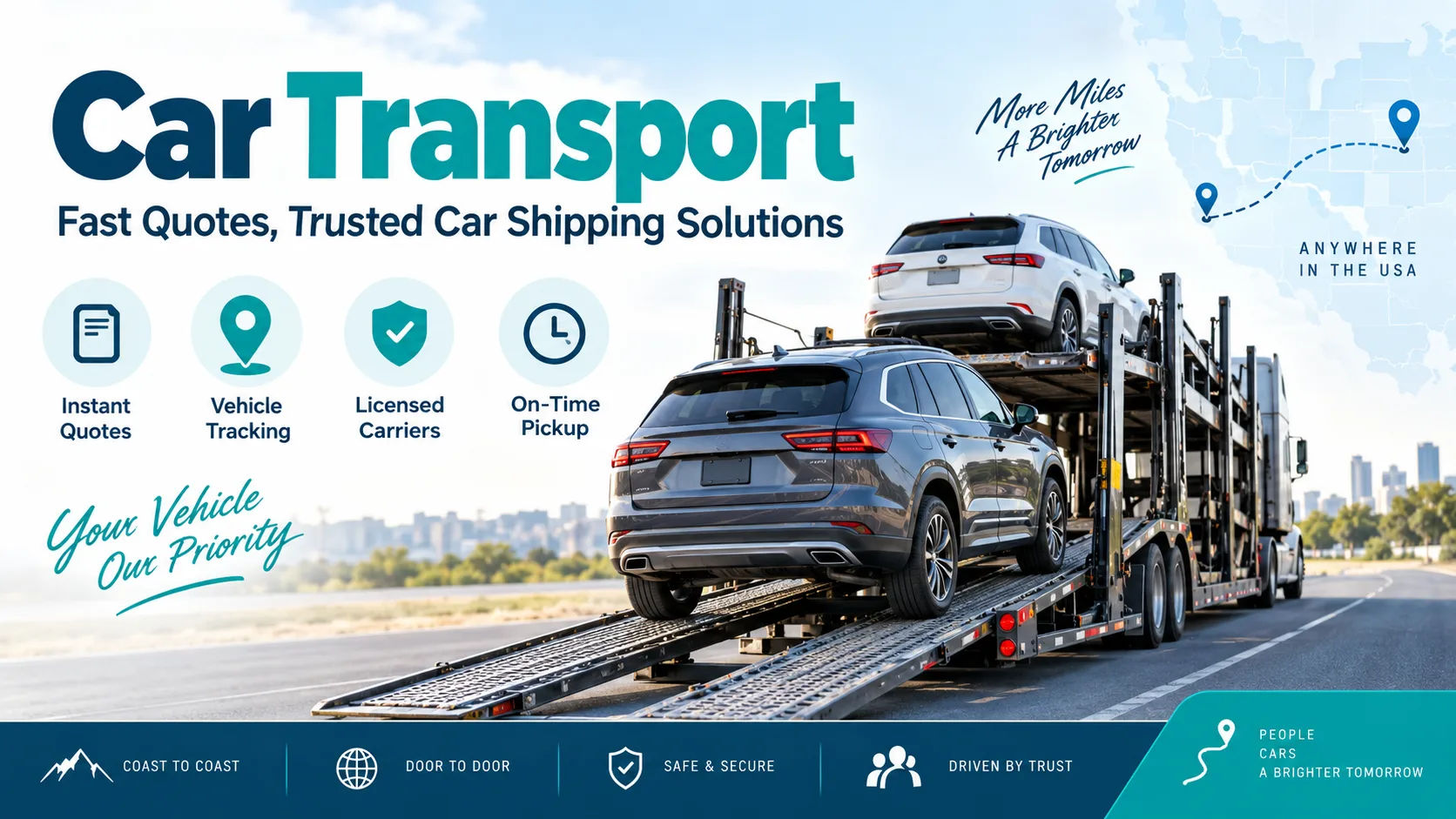
This shared capacity is one of the main reasons this shipping method is generally more affordable than enclosed transport. Instead of paying for an entire trailer for one vehicle, transportation costs are distributed across multiple vehicles traveling on the same route.
Understanding how these carriers work can help you choose the right shipping option, estimate what to expect during pickup, and understand why your vehicle may not always be loaded on a completely full trailer.
How Many Vehicles Can an Open Car Carrier Hold?
A standard open carrier typically holds 7 to 10 vehicles. Many modern carriers use a two-level design, allowing vehicles to be positioned on both the upper and lower decks.
Some carriers are commonly configured to carry seven or nine vehicles, while others can accommodate nine or ten standard-size vehicles. The capacity is not necessarily a fixed number because every shipment involves different vehicles and loading requirements.
For example, a carrier loaded with compact sedans may be able to use its available space more efficiently than one carrying several large SUVs or pickup trucks.
This is why saying that every open carrier holds exactly ten vehicles would be misleading.
The practical answer is that most standard open carriers are designed for approximately 7 to 10 vehicles per trip.
Why Do Open Carriers Carry So Many Vehicles?
The main purpose of a multi-car carrier is efficiency.
Transporting one vehicle at a time would require significantly more trucks, drivers, fuel, and road miles. By combining several vehicles on a single trailer, the carrier can move more cars during the same trip.
That shared capacity helps keep transportation prices competitive.
The concept is similar to sharing a delivery truck. The carrier has a certain operating cost for fuel, labor, maintenance, tolls, and mileage. When several customers share the same trip, those costs can be distributed among the vehicles being transported.
This is one of the biggest advantages of open car transport for everyday vehicle owners.
How Are Vehicles Arranged on an Open Carrier?
Most standard open carriers use two levels.
The lower deck is closer to the road surface, while the upper deck is elevated above it. Vehicles are positioned carefully so the carrier can maintain appropriate weight distribution and clearance.
The arrangement is not simply a matter of putting cars wherever there is empty space.
The carrier operator has to consider the dimensions and weight of each vehicle. A large pickup truck occupies more usable space than a small sedan. An oversized SUV can also affect how many other vehicles can be loaded.
The loading sequence matters as well.
Vehicles may need to be positioned in a particular order depending on where they are being delivered. A vehicle that is scheduled for an earlier delivery may need to be accessible without unnecessarily unloading other cars.
This makes the carrier's loading plan an important part of the transportation process.
Does Every Open Carrier Hold 10 Vehicles?
No.
Although ten vehicles is possible on some large open carriers, it should not be treated as a universal capacity.
Industry sources commonly describe standard open carriers as carrying between seven and ten vehicles. Other carrier configurations can have different capacities.
The actual number depends on several factors.
Trailer Design
Different manufacturers and trailer configurations provide different amounts of usable space.
Some carriers are designed around seven or nine vehicles, while others can accommodate ten under appropriate loading conditions.
The trailer's dimensions, deck arrangement, ramps, and weight limits all influence its practical capacity.
Vehicle Size
Vehicle size is one of the most important factors.
A carrier filled with compact cars can use its available space differently from a carrier transporting large SUVs, vans, or pickup trucks.
For example, several full-size trucks may take up substantially more space than several compact sedans.
This means a carrier advertised as having a ten-vehicle capacity may carry fewer vehicles on a particular trip if the vehicles being transported are larger.
Vehicle Weight
Weight is just as important as physical dimensions.
A carrier has a maximum legal and mechanical weight capacity. The operator must distribute the load appropriately rather than simply filling every available position.
If several particularly heavy vehicles are assigned to the same shipment, the carrier may need to adjust the load.
Safety and legal weight requirements take priority over maximizing the number of vehicles.
What Happens When a Carrier Is Not Full?
An open carrier does not have to be completely full before it can operate.
A carrier might leave with fewer than its maximum capacity because of available bookings, route requirements, vehicle sizes, scheduling issues, or delivery arrangements.
This is not necessarily a problem for the customer.
The carrier's job is to transport the assigned vehicles safely and efficiently. Maximum capacity represents what the trailer can potentially carry under suitable conditions, not a guarantee that every trip will have the maximum number of vehicles.
A partially loaded carrier can still complete the route normally.
In fact, a shipment may be arranged around several different pickup and delivery locations. The carrier may gain additional vehicles along the route or deliver some vehicles before reaching the final destination.
Does the Number of Vehicles Affect Shipping Cost?
It can indirectly affect the economics of shipping.
One of the reasons open car transport is generally less expensive than enclosed shipping is that multiple customers share the same carrier. Industry sources consistently identify the higher vehicle capacity of open carriers as a major factor in their lower per-vehicle transportation cost.
However, your individual price is not simply calculated by dividing the truck's operating cost by ten.
Your quote can depend on the shipping distance, vehicle type, pickup and delivery locations, season, fuel costs, route demand, vehicle condition, and other logistical factors.
The number of vehicles on the trailer is part of the larger business model rather than a simple formula for your individual price.
Are SUVs and Trucks Suitable for Open Car Transport?
Yes. Open carriers commonly transport sedans, SUVs, pickup trucks, and other standard vehicles.
However, larger vehicles can affect how many vehicles fit on the same trailer.
A carrier that could accommodate ten smaller cars may have room for fewer vehicles if several positions are occupied by large trucks or SUVs.
Vehicle height can also matter because the trailer has limited vertical clearance.
This is particularly important for modified trucks, lifted vehicles, vehicles with roof accessories, and other vehicles that differ significantly from their factory dimensions.
What About Oversized or Modified Vehicles?
Oversized vehicles require additional attention.
A lifted truck, large commercial-style SUV, lowered sports car, or vehicle with aftermarket body modifications may not fit standard loading requirements.
The problem may not simply be the available space.
A very low vehicle, for example, may have difficulty approaching the loading ramps without scraping. A tall vehicle may have insufficient clearance on an upper deck.
In these situations, the carrier may recommend a different trailer or loading arrangement.
That is why you should provide accurate information about modifications when requesting a shipping quote.
Trying to describe a modified vehicle as a standard sedan or SUV can create problems when the carrier arrives for pickup.
How Safe Is an Open Carrier With Multiple Vehicles?
The fact that several vehicles share a trailer does not automatically make the method unsafe.
Open carriers are specifically designed for multi-vehicle transportation. Vehicles are secured using appropriate restraints, and professional carriers follow loading and weight-distribution procedures.
Open carriers are also widely used to transport new vehicles from manufacturers and distribution centers to dealerships.
The primary difference between open and enclosed shipping is exposure.
An open trailer does not have a roof or solid walls surrounding the vehicles. Your vehicle can therefore encounter normal road dust, rain, road spray, and other environmental conditions during transit.
That does not mean the vehicle is simply sitting unsecured on a truck.
It is loaded onto a purpose-built carrier and secured for transportation.
Open Transport vs. Enclosed Transport Capacity
The difference becomes clearer when comparing open and enclosed trailers.
Open carriers commonly transport around seven to ten vehicles, while enclosed carriers generally carry fewer vehicles. Depending on the trailer, enclosed capacity can range from one or two vehicles to several vehicles on larger specialty carriers.
The reduced capacity of enclosed trailers is partly related to their design and purpose.
Enclosed transportation prioritizes additional protection from weather and road debris. It is often selected for classic cars, exotic vehicles, collector cars, high-value vehicles, and specially prepared automobiles.
Open transportation prioritizes efficiency and availability.
For an ordinary daily driver, the larger capacity of an open carrier often makes practical and financial sense.
Why Open Carriers Are So Common
There is a reason you regularly see large car carriers traveling on highways.
They are highly efficient.
A single driver can move multiple vehicles on one route rather than requiring separate trucks for every customer. Manufacturers, dealerships, fleet operators, vehicle owners, and shipping companies can all benefit from this system.
Recent industry sources describe open transport as the dominant method for standard vehicle shipping, with typical carriers handling approximately seven to ten vehicles.
That widespread use also contributes to carrier availability.
Because more transport companies operate open carriers, customers often have more options when looking for transportation on common routes.
Does Your Vehicle's Position Matter?
It can.
A vehicle may be placed on the upper or lower deck depending on the carrier's loading plan.
Some customers prefer an upper-deck position because it can reduce exposure to road spray from underneath the carrier. However, customers generally cannot assume they will receive a particular position unless it has been specifically arranged with the carrier.
The loading plan also depends on vehicle dimensions, weight, pickup and delivery sequence, and available space.
It is better to discuss any specific positioning request before booking rather than assuming it will be available at pickup.
What Should You Tell the Transport Company?
Accurate vehicle information makes the shipping process easier.
When requesting a quote, provide the vehicle's year, make, model, condition, and any significant modifications.
Mention whether the vehicle is running.
You should also disclose major modifications such as oversized tires, lifted suspension, lowered suspension, roof racks, spoilers, or other equipment that changes the vehicle's dimensions.
This information allows the carrier or broker to determine whether a standard carrier is appropriate.
It can also reduce the risk of surprises when the driver arrives.
Can Non-Running Vehicles Fit on an Open Carrier?
A non-running vehicle can often be transported on an open carrier, but loading it requires additional equipment and planning.
A vehicle that cannot start or move under its own power may need a winch or other loading equipment.
The carrier must also have a suitable position and enough access to load the vehicle safely.
Because non-running vehicles require additional handling, they may involve an extra charge.
The important point is that being inoperable does not automatically mean you need enclosed transportation. The appropriate carrier depends on the vehicle's condition and the equipment available.
Is Open Car Transport Right for Most Vehicles?
For many standard vehicles, yes.
If you are shipping a normal sedan, crossover, family SUV, minivan, or standard pickup truck, an open carrier is often the practical choice.
It generally provides broad availability and lower transportation costs while using a proven multi-vehicle shipping system.
However, the decision should consider the vehicle itself.
If you own a rare classic, expensive exotic, competition vehicle, or highly customized car, the additional protection of an enclosed trailer may justify its higher price.
The cheapest option is not always the best option when the vehicle has unusual protection requirements.
Frequently Asked Questions
How many cars fit on an open car carrier?
Most standard open carriers can transport approximately seven to ten vehicles. The exact number depends on trailer configuration, vehicle size, weight, and loading requirements. Some carriers are commonly configured for seven or nine vehicles, while larger configurations can carry nine or ten.
Can an open carrier carry SUVs and trucks?
Yes. Open carriers commonly transport SUVs and pickup trucks. However, larger vehicles consume more available space than compact cars, so a trailer's practical capacity may be lower when it is carrying several large vehicles.
Does an open carrier have to be completely full?
No. A carrier can operate without reaching its maximum capacity. The number of vehicles on a particular trip depends on bookings, route requirements, vehicle dimensions, weight, and scheduling.
Is open transport safe for a new vehicle?
Yes. New vehicles are routinely transported from manufacturers and distribution centers to dealerships using open carriers. The main tradeoff is that the vehicle is exposed to normal weather and road conditions during transportation.
Is enclosed transport better than open transport?
Not necessarily. Enclosed transport provides greater protection from weather and road debris, but it generally carries fewer vehicles and costs more. Open transport is usually appropriate for standard everyday vehicles, while enclosed shipping may make more sense for valuable, classic, exotic, or highly customized vehicles.
Conclusion
So, how many vehicles fit on open car transport? In most cases, the answer is about seven to ten vehicles per standard carrier. Some carriers are designed around seven or nine vehicles, while larger configurations can accommodate nine or ten. The exact capacity depends on the trailer, vehicle dimensions, weight, and loading arrangement.
The number matters because multi-vehicle shipping is what makes open transportation so efficient. Instead of moving one vehicle at a time, the carrier combines several shipments on the same trip. This helps distribute transportation costs while making carriers widely available on major routes.
However, maximum capacity should not be confused with guaranteed capacity. A carrier does not necessarily leave with ten vehicles every time. Large SUVs, pickup trucks, oversized vehicles, special loading requirements, and route logistics can all change the final load.
For most standard cars, SUVs, and trucks, open car transport offers a practical balance of cost, availability, and reliable vehicle handling. If your vehicle has unusual dimensions, modifications, very low clearance, or exceptional value, discuss those details before booking so the carrier can determine the most suitable transportation method.