
NAD+ testing is becoming an area of interest for people who want to understand their cellular health, energy levels, and overall well-being. Before arranging an NAD+ test Pakistan, one important question often comes up: Do you need to fast before providing a blood sample, or can you eat and drink as usual?The answer depends on the type of test, the laboratory's collection procedure, and whether other blood tests are being performed at the same time. 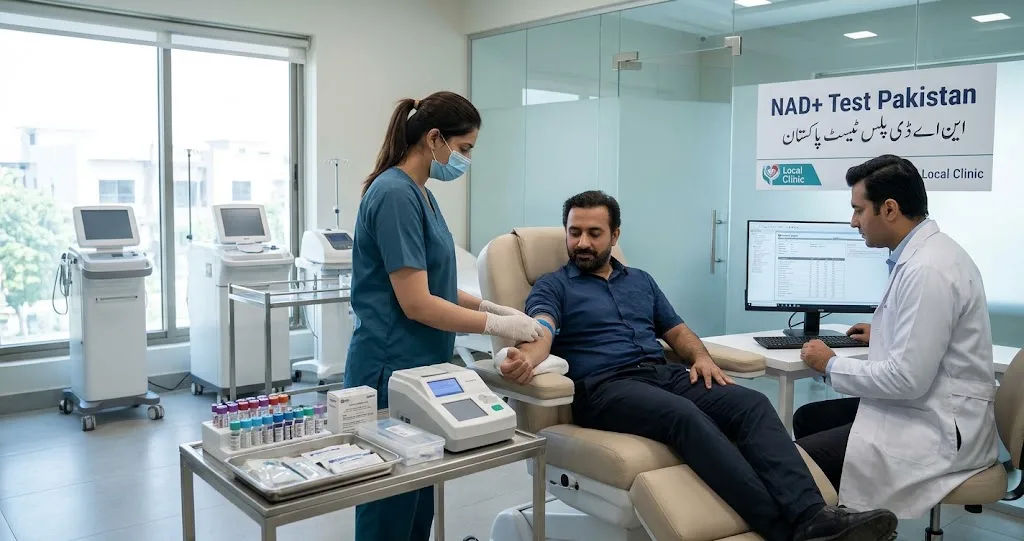 NAD+ testing is not as standardized as routine blood tests, so preparation instructions may vary between laboratories and testing providers.
Understanding these requirements can help you avoid unnecessary preparation, reduce the risk of inaccurate results, and make your laboratory visit easier. It is also important to distinguish between measuring NAD+ directly and testing other biomarkers associated with metabolism, nutrition, or cellular function.
This comprehensive guide explains when fasting may be necessary, how food and supplements can influence test results, what to ask a laboratory in Pakistan, and how to prepare for reliable testing.
NAD+ and Its Role in the Body
NAD+ stands for nicotinamide adenine dinucleotide. It is a coenzyme found in every living cell and plays an important role in converting nutrients into usable energy.
Your body depends on NAD+ for several essential processes, including energy production, cellular repair, and the activity of enzymes involved in metabolism. It also works alongside its reduced form, NADH, to support reactions that help cells function properly.
NAD+ levels can vary with age, diet, physical activity, sleep, health conditions, and certain supplements. However, the relationship between NAD+ levels and overall health is complex, and one measurement cannot explain every aspect of cellular function.
What Does an NAD+ Blood Test Measure?
An NAD+ blood test measures the amount of nicotinamide adenine dinucleotide in a particular blood sample. Depending on the testing method, a laboratory may measure NAD+ alone or examine related compounds.
Some tests also measure NADH, NADP+, NADPH, and other metabolites involved in cellular processes. These additional measurements can help provide a broader picture of certain metabolic pathways.
Different laboratories may use different sample types and analytical methods. Therefore, results from two different testing providers may not always be directly comparable.
Why Are People Interested in NAD+ Testing?
People may consider testing to learn more about their cellular metabolism, particularly when exploring healthy aging, nutrition, or the effects of lifestyle changes.
Some people also want to understand whether supplements containing NAD+ precursors, such as nicotinamide riboside (NR), nicotinamide mononucleotide (NMN), or vitamin B3 forms, influence their measured levels.
However, NAD+ testing is not a standalone diagnostic tool for most common health complaints. A result should be interpreted alongside medical history, symptoms, other relevant tests, and the specific method used by the laboratory.
Does NAD+ Testing Require Fasting?
In many cases, fasting is not required for NAD+ testing, but the exact requirement depends on the laboratory and its testing method.
For example, the NADMED testing method states that fasting is unnecessary before sample collection. The US BioTek NAD/NADH dried blood spot test also does not require fasting.
These examples show that a person may be able to eat normally before an NAD+ test. Nevertheless, they do not establish a universal rule for every laboratory offering an NAD+ test in Pakistan.
A testing provider may use a different analytical method or follow a protocol designed to standardize sample collection. If additional tests are ordered at the same appointment, fasting may also be required for those tests.
Why Do Fasting Instructions Differ?
There are several reasons why instructions can vary between testing providers.
Different laboratory methods: Some NAD+ tests use whole blood, while others use dried blood spots or plasma. Each method has specific requirements for collection, processing, and analysis.
Different testing panels: A test measuring NAD+ alone may have different preparation instructions from a panel that includes glucose, cholesterol, triglycerides, or other metabolic markers.
Consistency between samples: Some providers recommend collecting samples under similar conditions, such as at approximately the same time of day, to make repeat measurements easier to compare.
Research protocols: Some scientific studies have collected fasting blood samples to control the effects of recent meals. However, a research protocol that uses fasting does not automatically mean that every commercially available test requires it.
For anyone arranging an NAD+ test Pakistan, the safest approach is to confirm the preparation instructions with the actual testing provider before changing eating habits.
How Food May Affect NAD+ Test Results
Although fasting is not mandatory for every NAD+ test, food and nutrition may influence the body's metabolism and the levels of substances measured in blood.
NAD+ is continuously produced, used, and recycled. Its measured level reflects a combination of these processes rather than simply showing how much NAD+ a person has consumed.
The Role of Vitamin B3
Vitamin B3, also known as niacin, contributes to the body's production of NAD+. The body can use niacin and other related compounds to support NAD+ synthesis through different metabolic pathways.
Foods such as meat, fish, poultry, peanuts, legumes, and whole grains provide nutrients that contribute to normal metabolism. A balanced diet supports these processes over time.
However, eating a meal rich in vitamin B3 immediately before testing does not necessarily cause a predictable or clinically meaningful increase in the measured NAD+ level. The effect depends on several factors, including metabolism, the type of sample, and the analytical method.
Can Eating Breakfast Change the Result?
Eating breakfast before a non-fasting test may be acceptable when the laboratory explicitly permits it.
However, recent food intake can change certain blood measurements, particularly glucose and triglycerides. These changes are one reason why laboratories sometimes require fasting for tests included in a broader metabolic panel.
If your appointment includes an NAD+ test and a fasting glucose test, for example, you may need to follow the fasting instructions for the glucose test even if the NAD+ measurement itself does not require fasting.
Should You Avoid Specific Foods?
There is no universal list of foods that everyone must avoid before an NAD+ test.
Unless your laboratory provides special dietary instructions, it is generally sensible to eat your usual balanced meals in the days before testing rather than deliberately changing your diet to influence the result.
Avoid unusual dietary experiments, excessive alcohol consumption, or major changes in eating patterns just before a planned comparison test. If the provider gives you specific restrictions, follow those instructions instead.
NAD+ Supplements and Their Effect on Testing
Supplements deserve particular attention because some products are specifically designed to influence NAD+ metabolism.
These products may include NMN, nicotinamide riboside, niacin, nicotinamide, and other formulations marketed for cellular energy or healthy aging.
Research has shown that supplementation with NAD+ precursors can influence NAD-related measurements. For this reason, supplement use is important information when interpreting test results.
Should You Stop Taking Supplements Before the Test?
There is no single supplement-stopping period that applies to every NAD+ testing method.
Some commercial testing providers recommend avoiding high-dose NAD+ precursors for a specified period, while others may not require a pause. The correct preparation depends on the purpose of the test and the laboratory's protocol.
If your goal is to measure your current NAD+ status while taking supplements, stopping them without guidance could make the result less representative of your usual routine.
On the other hand, if your healthcare professional wants to assess your baseline levels without the immediate influence of supplementation, a temporary pause may be appropriate.
Do not stop prescribed medication or medically necessary supplements without advice from your healthcare professional. Tell the laboratory which products you take, their doses, and when you last took them.
How to Prepare for an NAD+ Test in Pakistan
Preparing properly can help you avoid delays and make your results easier to interpret. Before booking an NAD+ test Pakistan, ask the testing provider for written instructions that match the exact test you plan to take.
1. Confirm Whether Fasting Is Necessary
Contact the laboratory and ask whether your specific NAD+ test requires fasting. Do not assume that instructions for another provider or another test apply to your appointment.
If fasting is required, ask how many hours you must avoid food and which drinks are permitted. Many routine blood tests that require fasting use a period of approximately eight to twelve hours, but that is not a universal requirement for NAD+ testing.
If fasting is unnecessary, ask whether the laboratory still recommends collecting the sample in the morning or following any other restrictions.
2. Drink Water as Recommended
When fasting is required, plain water is generally permitted for many blood tests. Staying adequately hydrated can also make blood collection easier.
However, follow the instructions supplied for your particular test. Avoid assuming that coffee, tea, juice, or other drinks are allowed during a fasting period.
If your NAD+ test Pakistan does not require fasting, you can generally follow the laboratory's normal drinking instructions, including any specific restrictions on caffeine or alcohol.
3. Avoid Unusual Changes in Physical Activity
Strenuous exercise can influence certain metabolic measurements. If you are preparing for an NAD+ test, ask the provider whether intense exercise should be avoided on the day before collection or on the morning of your appointment.
You do not necessarily need to stop your usual physical activity for several days. The objective is to follow the laboratory's protocol and avoid introducing unnecessary differences between repeated measurements.
4. Tell the Laboratory About Your Medications
Provide a list of your regular medicines, vitamins, and supplements. Include any NAD+ precursor products, vitamin B3 supplements, and multivitamins.
This information helps your healthcare professional understand factors that could affect the result. Do not independently discontinue prescribed treatment simply to prepare for testing.
5. Follow the Sample Collection Instructions
Some tests require a blood sample collected from a vein, while others use a small blood sample applied to a special collection card.
For a laboratory-based NAD+ test Pakistan, the sample must be collected, stored, and transported according to the testing method's requirements.
Certain NAD+ measurements are sensitive to how samples are processed. Scientific research has highlighted the importance of standardized sample preparation for reliable measurement of extracellular NAD+.
This means that proper laboratory handling can be just as important as following dietary instructions.
What If You Accidentally Eat Before the Test?
Eating before an appointment does not automatically mean that your NAD+ test must be cancelled.
First, determine whether the specific test requires fasting. If the test is non-fasting, your meal may not prevent the laboratory from collecting your sample.
If fasting is required, inform the laboratory about what you ate and when you ate it. The staff can decide whether to proceed, adjust the appointment, or reschedule the test.
For a combined blood panel, the decision may depend on the other tests ordered. A meal might affect a fasting glucose or triglyceride measurement even when the NAD+ measurement can still be performed.
Never conceal a missed fasting requirement. Accurate information helps the laboratory decide whether the results will be suitable for their intended purpose.
What Should You Ask a Laboratory Before Booking?
Before arranging an NAD+ test Pakistan, ask a few practical questions to understand what the service includes and how to prepare.
-
Does this exact test require fasting, or can I eat normally?
-
What type of sample will you collect: whole blood, plasma, or dried blood spots?
-
Should I avoid caffeine, nicotine, or alcohol before the appointment?
-
Should I continue my current NAD+ supplements, or is a temporary pause recommended?
-
Does the test measure NAD+ alone or also NADH and other related metabolites?
-
Where is the sample analysed, and how is it transported if testing is performed elsewhere?
-
What reference range and analytical method will be used to interpret the result?
-
When should I expect the report, and will a qualified healthcare professional explain it?
These questions are particularly useful if the sample is collected locally but analysed by a specialist laboratory elsewhere.
The availability of a particular testing method can vary. Before paying for an NAD+ test Pakistan, confirm that the provider can perform the exact analysis you need rather than assuming that every laboratory offering general blood tests can measure NAD+.
How Reliable Are NAD+ Test Results?
The reliability of an NAD+ measurement depends on several factors, including the laboratory method, sample type, collection procedure, handling conditions, and consistency of preparation.
Unlike many established routine blood tests, NAD+ testing is not fully standardized across all providers. Different analytical methods may produce results that should not be compared directly.
Why Reference Ranges Matter
A reference range helps explain how a result compares with values expected for a particular testing method and population.
A number reported by one laboratory may not have the same meaning when measured using another method. For this reason, results should be assessed using the reference information supplied with the report.
An unusually low or high result should not automatically be interpreted as proof of a specific disease, nutritional deficiency, or accelerated aging.
Is One Test Enough to Understand Cellular Health?
Usually, one NAD+ result cannot provide a complete picture of cellular health.
Your body has many interconnected systems, and NAD+ is only one part of a much larger metabolic network. Sleep quality, physical activity, diet, age, illness, and supplement use may all be relevant when interpreting a measurement.
If repeat testing is recommended, ask whether both samples should be collected at the same time of day and under similar conditions. Consistent preparation can make changes easier to evaluate.
Can NAD+ Testing Diagnose Fatigue?
Fatigue can have many causes, including insufficient sleep, anemia, thyroid problems, infections, nutritional deficiencies, and other medical conditions.
Although NAD+ participates in cellular energy metabolism, a blood measurement alone cannot establish that low NAD+ is the cause of fatigue.
If you have persistent tiredness, weakness, or other unexplained symptoms, consult a healthcare professional about an appropriate assessment rather than relying exclusively on an NAD+ test Pakistan.
Common Mistakes to Avoid Before NAD+ Testing
Even when fasting is not required, a few preparation mistakes can make results more difficult to interpret.
Assuming every test follows the same rules: Different providers may use different testing methods. Always follow the instructions for your specific appointment.
Taking extra supplements before collection: Increasing your supplement dose to improve a result can interfere with the purpose of testing. Continue your usual routine unless your healthcare professional recommends otherwise.
Stopping medication without advice: Some medicines are essential for controlling chronic conditions. Do not discontinue them simply because you are having blood work.
Ignoring alcohol and caffeine guidance: Some NAD+ testing protocols recommend avoiding alcohol for 24 hours and limiting caffeine or nicotine before collection. These restrictions are method-specific, so confirm them with the laboratory.
Comparing unrelated laboratory reports: Differences in methods and reference ranges can make direct comparisons misleading. Use consistent testing conditions whenever possible.
Avoiding these mistakes can help make an NAD+ test Pakistan more useful as part of a broader health assessment.
Conclusion
Does NAD+ testing require fasting? The answer is that many NAD+ tests do not require fasting, but you should always confirm the requirements for your particular test.
Certain established testing methods, including NADMED and the US BioTek NAD/NADH dried blood spot test, allow sample collection without fasting. However, these instructions cannot automatically be applied to every provider or testing service in Pakistan.
Before arranging an NAD+ test Pakistan, check whether the test measures NAD+ alone or includes additional metabolic markers. If other blood tests are being performed, their fasting requirements may determine how you need to prepare for the appointment.
Pay attention to supplement use, medication instructions, hydration, and sample collection procedures. These factors can help your healthcare professional interpret the results in the context of your overall health.
It is equally important to understand what the test cannot tell you. NAD+ measurements can provide information about a particular aspect of cellular metabolism, but they cannot independently diagnose the cause of fatigue, determine your biological age with certainty, or predict how long you will live.
If you are considering an NAD+ test Pakistan to investigate symptoms or monitor a nutritional or lifestyle programme, discuss your goals with a qualified healthcare professional. They can help determine whether the test is appropriate and whether other investigations are needed.
Ultimately, the best preparation is not necessarily fasting. It is following the correct laboratory instructions, maintaining accurate information about your medications and supplements, and interpreting your results using an appropriate reference range. With these steps, NAD+ testing can be considered more carefully as one part of an informed approach to cellular health.