
Medicines play an important role in keeping people healthy, treating illnesses, and preventing diseases. However, before a medicine reaches a patient, it passes through several stages involving manufacturers, suppliers, warehouses, distributors, pharmacies, hospitals, and healthcare professionals. All these activities are connected through a system known as the pharmaceutical supply chain. 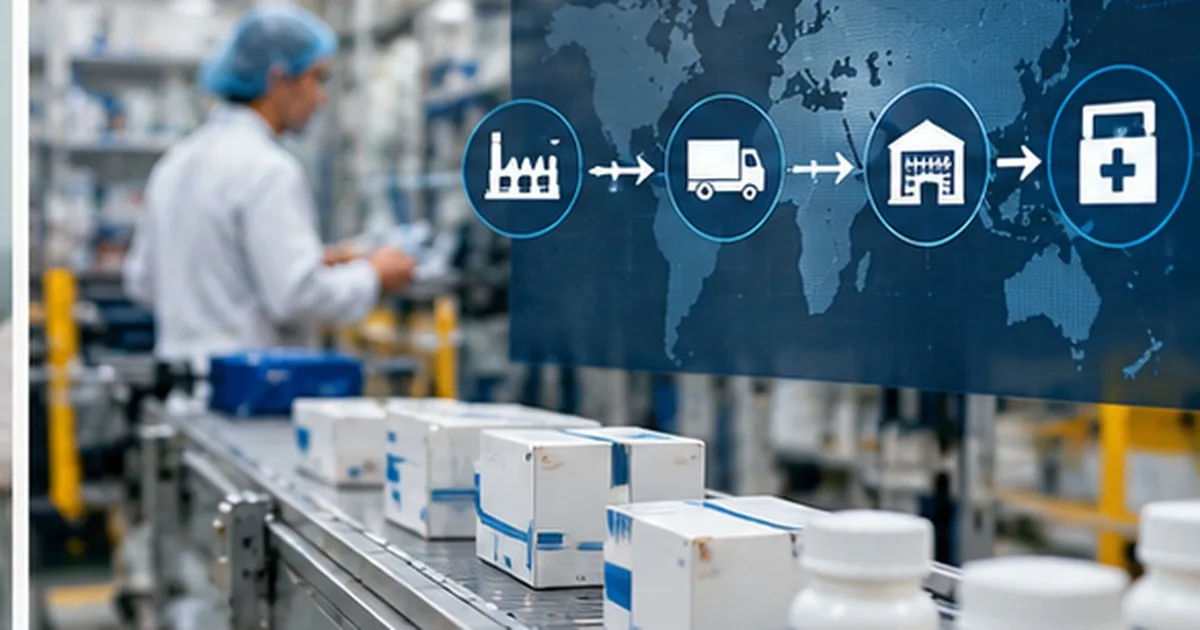 Understanding what is pharmaceutical supply chain means learning how medicines move from the companies that produce them to the people who need them. This system includes manufacturing, storage, transportation, quality control, inventory management, and delivery. Each step must be carefully managed because medicines can lose their effectiveness if they are stored incorrectly, delivered late, or exposed to unsuitable conditions.
The pharmaceutical supply chain is more than simply transporting medicine from one place to another. It ensures that the right products reach the right locations in the correct quantities, at the appropriate time, and in safe condition. When this system works efficiently, patients can access essential medicines, healthcare facilities can provide better treatment, and pharmaceutical companies can reduce waste and operating costs.
In this comprehensive guide, we will explain how the pharmaceutical supply chain works, identify its main participants, explore common challenges, and discuss how modern technology improves the movement of medicines around the world.
The Pharmaceutical Supply Chain
The pharmaceutical supply chain is the complete network of organizations, people, processes, and resources involved in producing and delivering medicines.
It begins with obtaining the raw materials needed to manufacture pharmaceutical products. These materials are processed in manufacturing facilities, tested for quality, packaged, stored, and transported to distribution centers. From there, medicines may travel to hospitals, pharmacies, clinics, and other authorized healthcare providers before reaching patients.
For example, imagine a person who needs medication to manage high blood pressure. The medicine may have been manufactured months earlier at a pharmaceutical facility, inspected for quality, transported to a warehouse, and delivered to a local pharmacy. When the patient purchases the medicine, the final stage of the supply chain is completed.
Every participant has a responsibility to maintain product quality, follow regulations, and ensure reliable delivery.
Why Is the Pharmaceutical Supply Chain Important?
The pharmaceutical supply chain directly affects public health. Without a reliable distribution system, even the best medicines cannot reach the people who need them.
A well-managed supply chain provides several important benefits:
-
Reliable medicine availability: Hospitals and pharmacies can maintain adequate supplies of essential treatments.
-
Patient safety: Proper storage, handling, and transportation help protect medicine quality.
-
Reduced waste: Better inventory management prevents unnecessary expiry and product damage.
-
Cost efficiency: Organized transportation and purchasing can reduce operating expenses.
-
Regulatory compliance: Documented processes help pharmaceutical businesses meet legal and quality requirements.
-
Emergency preparedness: A dependable network can help deliver essential medicines during outbreaks, natural disasters, and other emergencies.
These benefits demonstrate why pharmaceutical supply chain management is essential for healthcare systems of every size.
How Does the Pharmaceutical Supply Chain Work?
The pharmaceutical supply chain involves several connected stages. Each stage supports the next, and a problem at one point can affect the entire process.
1. Raw Material Sourcing
Obtaining active ingredients and other materials
2. Medicine Manufacturing
Producing medicines under controlled conditions
3. Quality Testing and Packaging
Checking quality, safety, labeling, and packaging
4. Warehousing and Distribution
Storing products and preparing orders for delivery
5. Transportation and Delivery
Moving medicines to hospitals, pharmacies, and clinics
6. Patient Access
Making medicines available through authorized healthcare providers
1. Raw Material Sourcing
The first stage involves obtaining the materials required to manufacture medicines.
These materials can include active pharmaceutical ingredients (APIs), chemical compounds, solvents, excipients, and packaging supplies. An active pharmaceutical ingredient is the component responsible for producing the intended therapeutic effect.
Pharmaceutical companies may obtain materials from domestic or international suppliers. Before using them, manufacturers must verify that suppliers meet appropriate quality standards and that the materials satisfy established specifications.
A shortage of an important ingredient can delay production and reduce the availability of finished medicines.
2. Medicine Manufacturing
Once suitable raw materials are available, pharmaceutical manufacturers produce medicines in controlled facilities.
The manufacturing process varies depending on the product. Tablets may require mixing, granulation, compression, and coating. Liquid medicines require different preparation and filling processes, while sterile injectable products need particularly strict contamination controls.
Manufacturers must follow applicable quality requirements and maintain accurate production records.
Consistency is essential because every batch must meet the relevant specifications for identity, strength, purity, and other quality characteristics.
3. Quality Testing and Packaging
Medicines must undergo appropriate quality checks before they are released for distribution.
Testing may examine ingredient identity, concentration, purity, stability, and microbiological quality, depending on the product. Authorized personnel review the required records and determine whether a batch meets the applicable release requirements.
After approval, medicines are packaged in suitable containers with the necessary labels and instructions.
Packaging protects products from damage, contamination, moisture, light, and other environmental factors. Labels also provide important information, including dosage instructions, batch numbers, expiry dates, and storage conditions.
4. Warehousing and Inventory Management
Finished medicines are stored in warehouses or distribution centers until they are needed.
These facilities must maintain appropriate environmental conditions. Some products can be stored at controlled room temperature, while others require refrigeration or freezing.
Inventory management helps companies understand how much stock is available, where products are located, and when additional supplies are required.
Many pharmaceutical businesses use a first-expiry, first-out approach when appropriate. This means that products with earlier expiry dates are prioritized for dispatch, reducing the risk of medicines expiring in storage.
5. Transportation and Distribution
Once medicines are ready for delivery, distributors arrange transportation to pharmacies, hospitals, clinics, and other authorized customers.
Transportation plans must consider delivery schedules, product requirements, security, distance, and local conditions.
Certain medicines need temperature-controlled vehicles or specialized packaging. If a refrigerated product becomes too warm during transit, its quality may be affected even when the package appears undamaged.
Distribution teams therefore monitor handling conditions and maintain records that support product traceability.
6. Delivery to Patients
The final stage occurs when medicines reach patients through authorized channels, such as pharmacies, hospitals, and clinics.
Healthcare professionals and pharmacists help ensure that medicines are supplied and used appropriately. They may also provide instructions about dosage, storage, possible side effects, and precautions.
The process does not always end when a product is sold. Recalls, safety notifications, returns, and the proper disposal of expired medicines may require additional supply chain activities.
Who Are the Main Participants in the Pharmaceutical Supply Chain?
Several organizations work together to keep medicines moving safely and efficiently.
Pharmaceutical Manufacturers
Manufacturers convert raw materials into finished pharmaceutical products. They are responsible for production processes, quality controls, documentation, packaging, and other applicable regulatory obligations.
Some companies produce their own medicines, while others use contract manufacturers to carry out specific production activities.
Raw Material and Packaging Suppliers
Suppliers provide the ingredients, containers, labels, and other materials required for manufacturing.
Their reliability matters because poor-quality materials or unexpected shortages can interrupt production. Pharmaceutical companies often evaluate suppliers carefully before establishing long-term relationships.
Distributors and Wholesalers
Distributors purchase or receive medicines from manufacturers and supply them to pharmacies, hospitals, and other customers.
They help connect manufacturers with many different healthcare facilities. Their responsibilities may include warehousing, order processing, stock rotation, transportation coordination, and maintaining distribution records.
Logistics Providers
Logistics providers specialize in moving products between locations. They may arrange road transportation, air freight, international shipping, temperature-controlled storage, and delivery tracking.
For sensitive pharmaceutical products, logistics providers must understand the relevant handling and temperature requirements.
Pharmacies and Hospitals
Pharmacies and hospitals are important links between pharmaceutical companies and patients.
They manage local inventories, monitor expiry dates, store medicines appropriately, and supply products according to applicable prescription and dispensing requirements.
They also communicate demand information that can help distributors and manufacturers plan future supplies.
Regulatory Authorities
Regulatory authorities establish and enforce requirements intended to protect medicine quality, safety, and effectiveness.
Depending on the country, their responsibilities may include approving products, inspecting manufacturing facilities, overseeing distribution practices, investigating quality concerns, and coordinating recalls.
Their oversight helps ensure that medicines entering the market meet the required standards.
What Is Pharmaceutical Supply Chain Management?
what is pharmaceutical supply chain management refers to the planning, coordination, monitoring, and improvement of all activities involved in producing and delivering medicines.
It focuses on ensuring that the supply chain operates reliably while protecting product quality and patient safety.
Effective management requires businesses to coordinate purchasing, manufacturing schedules, warehouse capacity, transportation, inventory levels, and customer demand.
Demand Forecasting
Demand forecasting involves estimating how much medicine customers will need in the future.
Companies may examine historical sales, seasonal disease patterns, prescription trends, hospital requirements, and information about upcoming public health needs.
For example, demand for certain respiratory medicines may rise during periods when respiratory infections become more common.
Accurate forecasts help businesses maintain sufficient stock without holding unnecessarily large quantities.
Inventory Control
Inventory control ensures that the right amount of medicine is available at the right location.
Too little stock can lead to shortages, delayed treatment, and emergency purchasing. Too much stock can increase storage costs and the risk of expiry.
Businesses can establish minimum stock levels, reorder points, and safety stock based on product demand, supplier lead times, and the consequences of a shortage.
Supplier Management
Supplier management involves selecting reliable suppliers, evaluating performance, and monitoring potential risks.
Companies may assess supplier quality systems, delivery reliability, production capacity, financial stability, and geographic exposure.
Maintaining alternative sources for important materials can reduce dependence on a single supplier, although switching suppliers may require technical assessments and regulatory approval.
Risk Management
Risk management identifies potential problems before they disrupt medicine availability or product quality.
Common risks include equipment failure, natural disasters, cyberattacks, transportation delays, ingredient shortages, and unexpected demand.
Businesses can prepare contingency plans, qualify alternative suppliers, maintain suitable reserve inventory, and establish procedures for responding to emergencies.
Common Challenges in the Pharmaceutical Supply Chain
Managing pharmaceutical products is more complicated than managing many ordinary consumer goods. Medicines must meet specific quality requirements, and some have strict storage or handling needs.
Medicine Shortages
Medicine shortages can occur when raw materials become unavailable, manufacturing facilities experience disruptions, or demand rises unexpectedly.
A shortage of one essential ingredient may affect several finished products if multiple manufacturers depend on the same source.
Improved forecasting, supplier diversification, and early communication can help reduce the impact of these disruptions.
Temperature Control
Some pharmaceutical products are sensitive to temperature changes.
Vaccines, certain biological medicines, and some injectable products may require a defined cold chain from manufacture through delivery. A cold chain is a temperature-controlled supply network designed to keep products within specified conditions.
Temperature monitoring equipment and validated packaging can help identify problems during transportation and storage.
If a temperature excursion occurs, trained personnel must assess the available evidence and follow the appropriate procedures before deciding whether a product can be used.
Counterfeit and Unauthorized Medicines
Counterfeit medicines can contain incorrect ingredients, insufficient active ingredients, harmful substances, or no effective ingredient at all.
They can put patients at serious risk and undermine confidence in healthcare systems.
Authorized sourcing, supplier verification, secure distribution, product identification systems, and appropriate recordkeeping help reduce the risk of counterfeit products entering legitimate supply chains.
Regulatory Complexity
Pharmaceutical companies may operate across several countries, each with its own regulatory requirements.
Differences in import rules, labeling, documentation, product registration, and distribution standards can increase the time and cost required to deliver medicines.
Businesses must understand the rules that apply to each market and maintain records that demonstrate compliance.
Transportation and Infrastructure Problems
Poor roads, limited refrigeration capacity, customs delays, power outages, and inadequate storage facilities can interfere with medicine delivery.
These problems may be especially challenging in remote communities and regions with limited healthcare infrastructure.
Careful route planning, reliable transportation partners, backup power, and suitable storage facilities can improve delivery performance.
How Technology Improves the Pharmaceutical Supply Chain
Modern technology helps pharmaceutical businesses improve visibility, coordination, accuracy, and efficiency.
Digital Inventory Management
Inventory management systems provide information about available stock, product locations, expiry dates, and outstanding orders.
Instead of relying entirely on manual records, staff can use digital tools to monitor inventory and identify items that need replenishment.
Accurate records also help organizations investigate discrepancies and reduce avoidable waste.
Artificial Intelligence and Data Analytics
Artificial intelligence and data analytics can help identify demand patterns, predict shortages, and improve production planning.
For example, analytical systems may examine sales history, supplier lead times, seasonal changes, and regional demand to estimate future inventory needs.
These predictions are useful only when the underlying data is reliable. Human oversight remains important, especially when decisions affect the availability of essential medicines.
Internet of Things Sensors
Internet of Things sensors can monitor temperature, humidity, location, and other relevant conditions during storage and transportation.
When readings move outside an approved range, monitoring systems may generate alerts so that staff can investigate promptly.
This technology is particularly valuable for products that require strict environmental controls.
Blockchain and Product Traceability
Blockchain technology can create shared records of transactions across participating organizations.
In suitable applications, these records may help improve the visibility of a medicine's movement through the supply chain. However, blockchain does not automatically guarantee that the original information entered into the system is accurate.
Other traceability technologies, including serialization, barcodes, and digital product identification systems, can also support product verification and recall management.
Automation and Electronic Documentation
Automated warehouse equipment can help staff locate, sort, and prepare orders more efficiently.
Electronic documentation can reduce paperwork, support faster information sharing, and make records easier to retrieve during audits or investigations.
Automation must still be properly validated, maintained, and monitored to ensure that it performs as intended.
How Can Companies Build a More Reliable Pharmaceutical Supply Chain?
Improving the pharmaceutical supply chain requires a combination of planning, quality management, technology, and cooperation.
First, companies should build strong relationships with qualified suppliers. Regular performance reviews and clear quality agreements can help identify problems early.
Second, businesses should improve demand forecasting and inventory visibility. Accurate information makes it easier to recognize shortages before they affect patients.
Third, organizations should establish clear procedures for storage, transportation, product recalls, and emergency response. Employees and logistics partners must understand their responsibilities.
Fourth, companies should invest in appropriate tracking and monitoring systems. Digital tools can help identify delays, detect temperature problems, and improve product traceability.
Finally, pharmaceutical businesses should review their performance regularly. Useful measures include order fulfillment rates, delivery times, stockout frequency, expiry-related waste, temperature excursions, and the time required to complete recalls.
These measures help managers identify weaknesses and determine whether corrective actions are working.
Pharmaceutical Supply Chain in Pakistan
The pharmaceutical supply chain is particularly important in countries where healthcare providers must serve large populations across different geographic areas.
In Pakistan, medicines may move through local manufacturers, imported pharmaceutical suppliers, distributors, wholesalers, pharmacies, hospitals, and healthcare facilities. The exact route depends on the product, manufacturer, distribution arrangement, and applicable legal requirements.
Reliable distribution is essential for urban hospitals as well as smaller facilities serving rural communities.
Several factors can affect supply chain performance, including import delays, currency fluctuations, transportation costs, storage limitations, and inconsistent access to specialized cold chain facilities.
Pharmaceutical businesses can address these challenges by improving stock planning, maintaining appropriate storage conditions, strengthening supplier relationships, and investing in product traceability.
Compliance with applicable requirements and oversight by the relevant authorities are also important for ensuring that medicines entering distribution channels meet established standards.
Patients and healthcare providers can contribute to safer medicine use by obtaining products from authorized sources, checking packaging and expiry information, and following storage instructions provided by pharmacists or manufacturers.
The Difference Between a Pharmaceutical Supply Chain and a General Supply Chain
A general supply chain moves products from raw material suppliers to manufacturers, retailers, and customers. It may involve items such as clothing, furniture, electronics, or food.
A pharmaceutical supply chain follows a similar structure but has additional responsibilities because the products directly affect human health.
|
Feature |
General Supply Chain |
Pharmaceutical Supply Chain |
|---|---|---|
|
Main objective |
Deliver products efficiently |
Deliver medicines efficiently while protecting patient safety |
|
Quality requirements |
Depend on the product and industry |
Include strict medicine-specific quality controls |
|
Storage |
Depends on product characteristics |
May require validated temperature and environmental controls |
|
Traceability |
Supports inventory and product tracking |
Also supports investigations, safety monitoring, and recalls |
|
Regulation |
Varies by industry |
Often involves extensive pharmaceutical regulation |
|
Expiry management |
Depends on product type |
Essential for medicines with defined expiry dates |
|
Consequences of failure |
Financial loss or customer dissatisfaction |
May also cause treatment delays and serious health risks |
The key difference is the level of responsibility involved in maintaining medicine quality and protecting patients throughout the distribution process.
Conclusion
Understanding what is pharmaceutical supply chain in simple terms helps explain how medicines travel from their original ingredients to the patients who depend on them. It is a connected system involving suppliers, manufacturers, quality testing facilities, warehouses, transportation providers, distributors, pharmacies, hospitals, and regulatory authorities.
Every stage has a specific purpose. Raw materials must meet quality requirements, manufacturing processes must remain controlled, finished medicines must be tested and packaged correctly, and products must be stored and transported under appropriate conditions. Reliable inventory management and accurate forecasting also help ensure that essential medicines remain available when needed.
Pharmaceutical supply chain management brings these activities together through planning, monitoring, coordination, and risk control. It helps organizations reduce shortages, prevent waste, protect product quality, and use resources more effectively.
At the same time, the industry faces significant challenges, including supply disruptions, counterfeit products, temperature excursions, regulatory complexity, and rising operating costs. Technology such as digital inventory systems, artificial intelligence, tracking sensors, and product identification tools can help address these problems when implemented responsibly.
Ultimately, a successful pharmaceutical supply chain is not measured only by how quickly or cheaply a medicine reaches its destination. Its most important purpose is to make sure that patients receive the right medicine, in the right condition, through a reliable and authorized distribution system. By strengthening quality controls, improving collaboration, and preparing for disruptions, pharmaceutical organizations can support safer healthcare and more dependable access to treatment.